



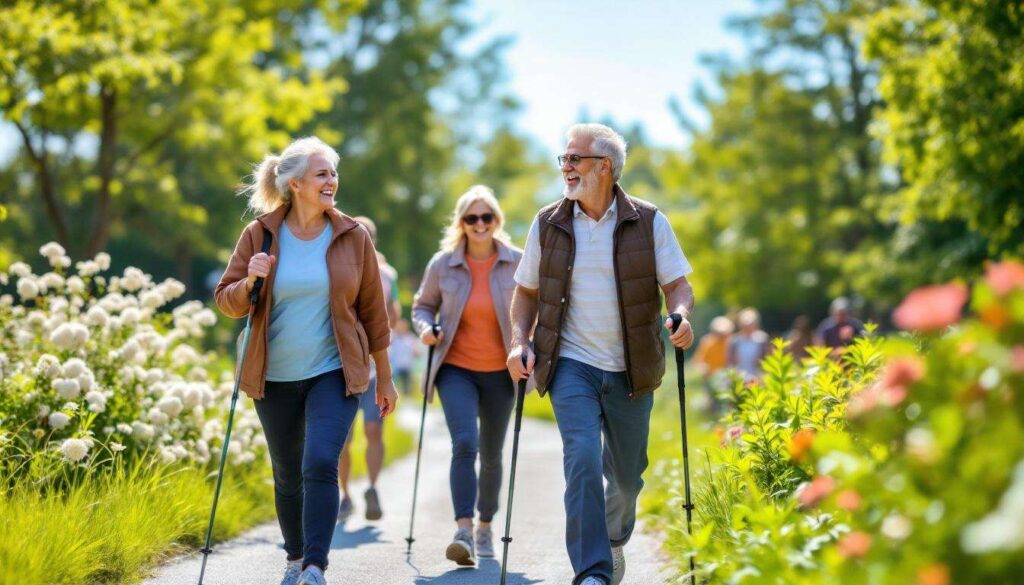
Staying active becomes increasingly vital as we age, yet many people over 50 find traditional gym environments intimidating or unsuitable for their needs. The repetitive nature of machine-based workouts can lead to joint strain and muscle stiffness, whilst failing to address the crucial elements of balance, coordination and functional movement required for daily life. Walking, when approached strategically with varied techniques, offers a low-impact alternative that delivers comprehensive fitness benefits without the drawbacks associated with conventional gym sessions. These six daily walking routines provide accessible, effective methods to enhance cardiovascular health, build strength and improve overall wellbeing.
Brisk walking: a comprehensive activity after 50
The foundation of cardiovascular fitness
Brisk walking serves as the cornerstone of any effective walking programme for individuals over 50. This straightforward yet powerful activity elevates heart rate sufficiently to strengthen the cardiovascular system whilst remaining gentle on joints and connective tissues. Unlike high-impact gym activities, brisk walking allows the body to adapt gradually, reducing injury risk whilst building endurance.
To maximise benefits, maintain a pace that allows conversation but requires some effort. Key elements include:
- Walking at approximately 5 to 6 kilometres per hour
- Keeping posture upright with shoulders relaxed
- Engaging core muscles throughout the session
- Swinging arms naturally to enhance momentum
- Breathing rhythmically and deeply
Measuring intensity effectively
Determining appropriate intensity ensures optimal results without overexertion. The talk test provides a simple gauge: one should be able to speak in short sentences but not sing comfortably. Alternatively, aim for a perceived exertion level of 5 to 6 on a scale of 10, where walking feels moderately challenging but sustainable for 30 to 45 minutes.
| Duration | Frequency | Expected benefits |
|---|---|---|
| 30-45 minutes | 5-6 days weekly | Improved cardiovascular health, enhanced endurance |
| 20-30 minutes | Daily | Consistent calorie expenditure, mood enhancement |
Regular brisk walking sessions establish a solid fitness foundation, preparing the body for more challenging variations that further enhance strength and coordination.
Incorporating intervals to boost your walk
The science behind interval training
Interval walking alternates between periods of higher intensity and recovery, creating a workout that surpasses steady-state walking for metabolic benefits. This approach increases calorie burn, improves cardiovascular capacity and builds muscular endurance more effectively than maintaining a constant pace. Research demonstrates that interval training produces superior fitness gains whilst requiring less total exercise time.
Implementing interval techniques
Begin with a five-minute warm-up at a comfortable pace, then alternate between faster and moderate speeds. A typical pattern includes:
- Two minutes of brisk walking at increased pace
- Two minutes of moderate recovery walking
- Repeat the cycle 6 to 8 times
- Conclude with a five-minute cool-down
As fitness improves, adjust the ratio by extending high-intensity periods to three minutes whilst reducing recovery to 90 seconds. The flexibility of this method allows personalisation based on current fitness levels and daily energy fluctuations.
Physiological adaptations
Interval walking triggers beneficial adaptations including enhanced oxygen utilisation, improved insulin sensitivity and increased mitochondrial density within muscle cells. These changes translate to greater stamina for daily activities and improved metabolic health. The varied intensity also prevents the monotony that often accompanies steady-state exercise, maintaining motivation over time.
Beyond cardiovascular improvements, adding terrain variations creates additional challenges that specifically target lower body strength.
Including inclines to strengthen the lower body
Natural resistance training
Walking uphill provides natural resistance that strengthens quadriceps, hamstrings, glutes and calves without the joint stress associated with gym weights. Inclines force muscles to work harder against gravity, building functional strength essential for climbing stairs, rising from chairs and maintaining independence. This form of training proves particularly valuable after 50 when muscle mass naturally declines.
Finding suitable inclines
Outdoor environments offer varied terrain options:
- Gentle hills in local parks or neighbourhoods
- Gradual slopes along footpaths
- Stepped inclines with intermittent flat sections
- Bridge approaches or elevated walkways
For those preferring indoor options, treadmills with adjustable incline settings provide controlled environments. Start with modest gradients of 3 to 5 per cent, progressively increasing as strength develops. The key lies in consistent practice rather than extreme angles that might compromise form or safety.
Technique considerations
Proper form maximises benefits whilst minimising injury risk. Lean slightly forward from the ankles, not the waist, maintaining an upright torso. Shorten stride length naturally and push through the entire foot, engaging glutes and hamstrings. Arms should swing more vigorously to assist propulsion and maintain balance.
| Incline gradient | Muscle emphasis | Difficulty level |
|---|---|---|
| 3-5% | Quadriceps, calves | Moderate |
| 6-8% | Glutes, hamstrings | Challenging |
| 9-12% | Full lower body | Advanced |
Whilst inclines build strength in forward motion, exploring lateral movements addresses often-neglected stabilising muscles crucial for balance.
Sideways walking: an ally for stability
Activating stabiliser muscles
Sideways walking engages hip abductors and adductors, muscle groups rarely challenged during forward movement. These stabilising muscles prove essential for maintaining balance, preventing falls and supporting hip joint health. After 50, when fall risk increases, strengthening these muscles becomes particularly important for preserving mobility and independence.
Execution methodology
Practise sideways walking on flat, clear surfaces initially. Stand with feet hip-width apart, then step sideways with one foot, bringing the other to meet it. Continue for 10 to 15 steps before reversing direction. Key points include:
- Maintaining upright posture throughout
- Keeping knees slightly bent
- Engaging core muscles for stability
- Moving deliberately rather than rushing
- Avoiding crossing feet to prevent tripping
Progressive variations
Once comfortable with basic sideways walking, introduce variations to increase challenge. Try lateral grapevines, crossing one foot behind the other whilst moving sideways, or incorporate gentle squats between steps. Performing sideways walking on slight inclines further intensifies the workout, recruiting additional muscle fibres.
This unconventional movement pattern not only strengthens stabilisers but also enhances proprioception, the body’s awareness of its position in space. Improved proprioception translates to better coordination and reduced injury risk during all activities.
Adding external resistance through weighted walking creates another dimension of challenge that elevates fitness gains.
Weighted walking: energising your sessions
Benefits of added resistance
Carrying additional weight during walks increases energy expenditure, builds bone density and strengthens muscles throughout the body. For individuals over 50 concerned about osteoporosis or muscle loss, weighted walking offers dual benefits of cardiovascular exercise and resistance training. The added load stimulates bone formation whilst challenging muscles to adapt and grow stronger.
Safe implementation strategies
Begin conservatively with minimal weight, allowing the body to adapt gradually. Appropriate options include:
- Weighted vests distributing load evenly across the torso
- Light hand weights of 0.5 to 1 kilogram each
- Backpacks containing water bottles or books
- Ankle weights for advanced practitioners
Weighted vests prove most effective as they maintain natural arm swing and proper posture. Hand weights require careful attention to form, ensuring arms swing naturally rather than creating tension in shoulders or neck. Start with 5 to 10 per cent of body weight, gradually increasing as strength develops.
Precautions and contraindications
Individuals with joint concerns, balance issues or cardiovascular conditions should consult healthcare providers before adding weight. Improper use can strain joints or compromise gait patterns, potentially causing injury. Always prioritise proper form over added resistance, and discontinue weighted walking if pain or discomfort develops.
| Weight type | Advantages | Considerations |
|---|---|---|
| Weighted vest | Even distribution, natural movement | Initial cost, fit adjustment needed |
| Hand weights | Affordable, adjustable | May alter arm swing, shoulder strain risk |
| Backpack | Readily available, customisable | Uneven load distribution possible |
Whilst forward and lateral movements address many fitness components, exploring backward walking introduces unique coordination challenges.
Trying backward walking for more coordination
Neurological and physical benefits
Backward walking, though unconventional, delivers remarkable benefits for coordination, balance and cognitive function. This novel movement pattern activates different neural pathways than forward walking, enhancing brain plasticity and improving overall motor control. The activity particularly strengthens quadriceps whilst reducing impact on knee joints, making it valuable for those with anterior knee pain.
Safe practice guidelines
Safety remains paramount when walking backwards. Choose environments free from obstacles:
- Empty corridors or gymnasium spaces
- Quiet residential streets with good visibility
- Running tracks with clear sightlines
- Treadmills at very low speeds with handrail support
Begin with short distances of 10 to 15 metres, frequently glancing behind to maintain awareness. Place feet deliberately, rolling from toe to heel with each step. Engage core muscles to maintain upright posture and prevent leaning backwards. Consider practising with a partner initially for added safety and confidence.
Integration into routines
Incorporate backward walking intervals into regular walks rather than dedicating entire sessions to this technique. After warming up with five minutes of forward walking, add 30-second backward walking intervals, gradually extending duration as coordination improves. This approach provides variety and challenge whilst maintaining safety through limited exposure.
The proprioceptive demands of backward walking complement other walking variations, creating a comprehensive programme that addresses multiple fitness components simultaneously. Regular practice enhances spatial awareness and reaction time, skills that translate to improved safety during daily activities.
These six walking routines collectively offer a complete fitness solution for individuals over 50, addressing cardiovascular health, muscular strength, balance, coordination and bone density. By incorporating variety and progressive challenge, walking transcends simple exercise to become a sustainable, enjoyable path towards lasting health and vitality.