



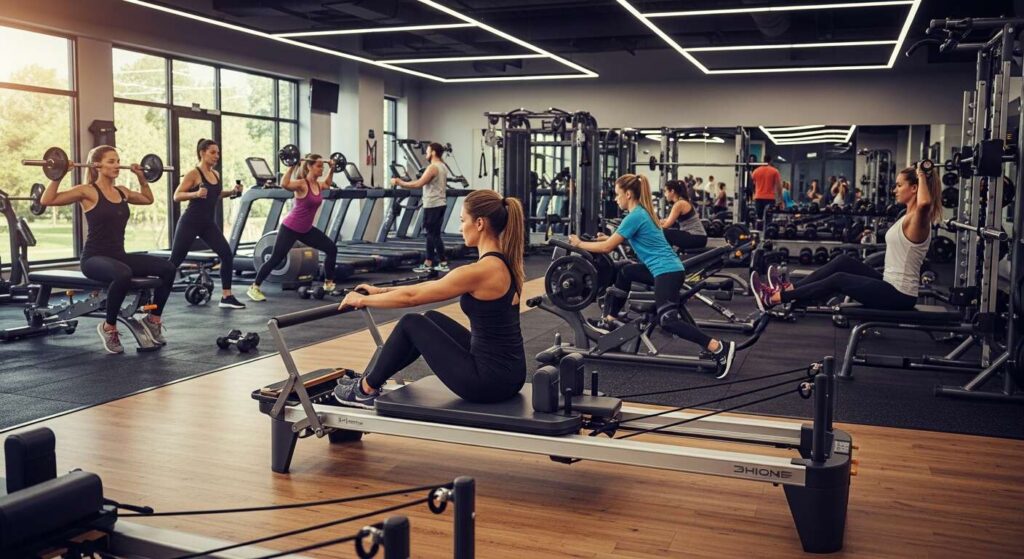
The fitness landscape presents practitioners with numerous approaches to physical development, each promising distinct benefits for health and performance. Among these methods, pilates and strength training stand out as two fundamentally different disciplines that attract dedicated followings. Whilst strength training has long dominated discussions around muscle building and physical power, pilates has emerged as a compelling alternative emphasising controlled movement and core stability. Understanding the nuances between these practices becomes essential for anyone seeking to optimise their training regimen for muscle growth and long-term health outcomes.
Definition and objectives of pilates
Origins and core philosophy
Pilates represents a systematic approach to physical conditioning developed in the early twentieth century. This method centres on controlled movements that engage the entire body, with particular emphasis on core musculature. The practice aims to create a balanced physique through exercises that demand concentration, precision and fluid motion. Unlike high-intensity training modalities, pilates prioritises quality of movement over quantity of repetitions.
Primary objectives of pilates practice
The fundamental goals of pilates extend beyond simple muscle development to encompass broader aspects of physical function:
- Enhancement of postural alignment and body awareness
- Development of core strength and stability
- Improvement of flexibility and joint mobility
- Refinement of movement patterns and coordination
- Reduction of muscular imbalances throughout the body
Equipment and resistance methods
Pilates practitioners utilise various forms of resistance to challenge muscles. Mat-based exercises rely primarily on bodyweight, whilst specialised apparatus such as the reformer incorporates springs and pulleys to provide adjustable resistance. This equipment allows for progressive challenge whilst maintaining the method’s emphasis on controlled, deliberate movement. The resistance employed in pilates differs markedly from traditional weightlifting, focusing on sustained muscular engagement rather than maximal force production.
These foundational principles establish pilates as a distinct training methodology, setting the stage for examining how alternative approaches pursue similar fitness objectives through different means.
Fundamental principles of strength training
Progressive overload as the cornerstone
Strength training operates on the principle of progressive overload, whereby muscles are subjected to increasingly demanding resistance over time. This systematic increase in training stimulus forces physiological adaptations, including muscle fibre growth and enhanced neuromuscular efficiency. The body responds to these demands by increasing muscle cross-sectional area and improving its capacity to generate force.
Training variables and protocols
Effective strength training manipulates several key variables to optimise results:
| Variable | Typical Range for Hypertrophy | Purpose |
|---|---|---|
| Repetitions | 6-12 per set | Maximise muscle growth |
| Sets | 3-5 per exercise | Adequate training volume |
| Rest intervals | 60-120 seconds | Recovery between efforts |
| Training frequency | 2-4 sessions weekly | Stimulus and recovery balance |
Physiological adaptations
Beyond muscular development, strength training produces numerous systemic benefits. Regular resistance exercise increases bone mineral density, reducing osteoporosis risk and improving skeletal integrity. Metabolic function improves through enhanced insulin sensitivity and elevated resting metabolic rate. Furthermore, strength training supports long-term mobility and functional independence, particularly valuable as individuals age.
With these contrasting methodologies defined, examining their respective contributions to muscle development reveals important distinctions in outcomes and applications.
Comparison of the benefits of pilates for muscle growth
Muscle development in novice practitioners
Pilates can facilitate modest muscle gains, particularly among individuals new to structured exercise. Research demonstrates that previously sedentary individuals experience measurable improvements in muscle endurance and strength when beginning pilates practice. These adaptations reflect the body’s response to novel movement patterns and sustained muscular engagement. However, the magnitude of these changes remains considerably smaller than those achieved through traditional strength training protocols.
Limitations for advanced muscle development
For individuals already familiar with resistance training, pilates presents significant limitations regarding muscle hypertrophy:
- Insufficient resistance levels to stimulate maximal muscle growth
- Limited capacity for progressive overload compared to weightlifting
- Emphasis on endurance rather than maximal strength development
- Lack of mechanical tension necessary for significant fibre recruitment
Specific populations benefiting from pilates
Certain groups derive particular value from pilates-based muscle conditioning. Studies conducted with overweight women revealed improvements in muscular endurance and functional strength following consistent pilates practice. Individuals recovering from injury benefit from the method’s controlled, low-impact approach to rebuilding muscular function. Additionally, those seeking to address postural weaknesses find pilates effective for targeting stabilising muscles often neglected in conventional training.
Whilst pilates offers specific advantages for muscle conditioning, examining strength training’s contribution to longevity reveals broader health implications worth considering.
Advantages of strength training for longevity
Impact on age-related muscle loss
Sarcopenia, the progressive loss of muscle mass with ageing, represents a significant threat to healthspan and independence. Strength training provides the most effective intervention against this decline. Regular resistance exercise preserves muscle tissue and maintains the neuromuscular connections essential for functional movement. Research consistently demonstrates that individuals maintaining strength training routines throughout adulthood experience substantially better physical function in later years compared to sedentary counterparts.
Metabolic and cardiovascular benefits
The longevity advantages of strength training extend beyond musculoskeletal health:
- Improved glucose metabolism and reduced diabetes risk
- Enhanced cardiovascular function and blood pressure regulation
- Increased bone density reducing fracture risk
- Better lipid profiles and reduced inflammation markers
- Maintained metabolic rate supporting healthy body composition
Functional capacity and quality of life
Strength training directly supports activities of daily living, from carrying groceries to climbing stairs. This functional capacity proves crucial for maintaining independence as individuals age. The confidence derived from physical capability extends to psychological wellbeing, with resistance training associated with reduced anxiety and improved mood. These multifaceted benefits position strength training as a cornerstone practice for those prioritising long-term health outcomes.
Recognising the distinct strengths of each method naturally leads to exploring how they might work together rather than compete.
How pilates and strength training can complement each other
Integrated programming strategies
Rather than viewing these modalities as mutually exclusive, practitioners can design complementary programmes that harness the benefits of both. A typical integrated approach might involve three strength training sessions weekly focused on progressive overload, supplemented by one or two pilates sessions emphasising movement quality and recovery. This combination addresses multiple fitness components whilst managing cumulative fatigue.
Injury prevention and movement quality
Pilates serves valuable functions within a strength-focused programme:
- Identification and correction of movement compensations
- Development of core stability supporting compound lifts
- Enhanced body awareness improving exercise technique
- Active recovery promoting tissue repair between intense sessions
- Flexibility work supporting full range of motion in strength exercises
Practical implementation considerations
Individuals new to exercise benefit from establishing foundational movement patterns through pilates before progressing to heavier loads. This approach builds essential stability and body awareness, reducing injury risk when transitioning to strength training. Conversely, experienced lifters may incorporate pilates to address specific weaknesses or imbalances that emerge from repetitive training patterns. The key lies in viewing each method as serving distinct but compatible purposes within a comprehensive fitness strategy.
Understanding these complementary relationships provides context for making informed decisions about training priorities and programme design.
Conclusion: choosing between pilates and strength training to achieve your goals
The question of superiority between pilates and strength training proves less meaningful than understanding their respective applications. Strength training remains unmatched for building muscle mass, increasing bone density and supporting longevity through preservation of functional capacity. Pilates offers valuable benefits for movement quality, core stability and injury rehabilitation, particularly for beginners or those recovering from physical setbacks. The most effective approach for most individuals involves strategic integration of both methods, with strength training forming the foundation for muscle development and pilates serving complementary roles in movement refinement and recovery. Personal goals, current fitness level and individual circumstances should guide the balance between these practices, recognising that optimal outcomes often emerge from thoughtful combination rather than exclusive commitment to a single modality.