


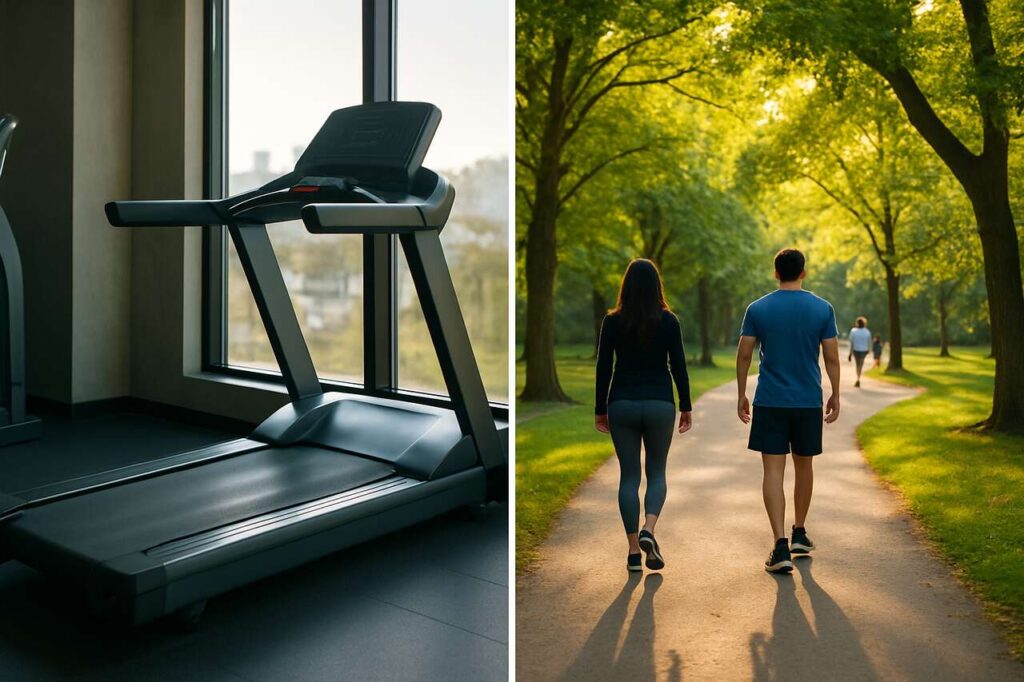
Walking remains one of the most accessible forms of exercise, yet the debate between treadmill training and outdoor strolls continues to divide fitness enthusiasts. Both methods offer distinct advantages whilst delivering comparable health outcomes, making the decision largely dependent on individual circumstances, preferences, and specific fitness objectives. Understanding the nuances of each approach enables walkers to make informed choices that align with their lifestyle and wellness goals.
Comparison of the benefits of treadmill and outdoor walking
Cardiovascular improvements across both methods
Research demonstrates that walking delivers substantial cardiovascular benefits regardless of location. Regular walking can reduce the risk of cardiovascular diseases by up to 66% for individuals without pre-existing risk factors and by 63% for those with them. This significant protective effect positions walking as a crucial intervention against heart disease, which remains the leading cause of death in numerous developed nations. The physiological adaptations occur similarly whether steps are taken on a moving belt or natural terrain, provided the intensity and duration remain comparable.
Caloric expenditure and energy demands
The energy expenditure between treadmill and outdoor walking shows interesting variations. Key differences include:
- Outdoor walking typically requires slightly more effort due to wind resistance and terrain variations
- Treadmill walking at a 1% incline approximates the energy cost of outdoor walking on flat surfaces
- Natural terrain changes engage stabilising muscles more comprehensively
- Controlled treadmill settings allow precise caloric targeting through speed and incline adjustments
Muscular engagement and biomechanical considerations
Outdoor walking activates additional muscle groups due to uneven surfaces, requiring constant micro-adjustments for balance and stability. Treadmills provide a consistent, predictable surface that reduces these demands but allows for controlled progressive overload through adjustable incline settings. Both methods effectively strengthen lower body musculature, though the specific recruitment patterns differ subtly. These distinctions become particularly relevant when considering how each environment shapes overall fitness development and long-term exercise adherence.
Impact on health and well-being
Physical health outcomes
Meeting the recommended 150 to 300 minutes of moderate walking weekly yields substantial health improvements. Studies indicate that maintaining a pace of approximately 120 steps per minute optimises cardiovascular conditioning whilst remaining accessible to most fitness levels. The low-impact nature of walking makes it suitable for individuals across age groups and physical capabilities, requiring no specialised equipment or advanced training. Two 15-minute sessions deliver benefits comparable to a single 30-minute walk, offering flexibility for those with demanding schedules.
Mental health and cognitive function
Walking’s influence extends beyond physical parameters to encompass psychological well-being. Regular walking practice correlates with:
- Reduced symptoms of anxiety and depression
- Enhanced cognitive function and memory retention
- Improved sleep quality and duration
- Increased overall life satisfaction and stress resilience
Outdoor environments amplify certain mental health benefits through exposure to natural settings, a phenomenon researchers term “green exercise”. Treadmill walking, whilst lacking this environmental component, still delivers measurable psychological improvements through the physiological effects of exercise itself.
Long-term wellness considerations
| Health metric | Treadmill walking | Outdoor walking |
|---|---|---|
| Cardiovascular protection | Excellent | Excellent |
| Joint impact | Low (cushioned surface) | Variable (terrain dependent) |
| Vitamin D synthesis | None | Significant |
| Consistency potential | High (weather independent) | Moderate (weather dependent) |
The cumulative health effects of sustained walking practice prove remarkably similar between methods, though specific advantages emerge in different contexts. This equivalence in core outcomes naturally leads to examining how psychological factors influence exercise adherence and enjoyment.
Effects on motivation and mood
Environmental stimulation and engagement
Outdoor walking provides constantly changing scenery, which combats the monotony that frequently undermines exercise commitment. Natural environments offer visual variety, seasonal transformations, and unpredictable elements that maintain cognitive engagement. Conversely, treadmill walking occurs in static surroundings, potentially leading to psychological fatigue despite adequate physical exertion. However, modern treadmills increasingly incorporate entertainment options, virtual courses, and interactive programming to address this limitation.
Social dimensions of walking practice
The social context differs markedly between settings. Outdoor walking facilitates:
- Spontaneous interactions with other walkers and community members
- Group walking activities in parks and designated trails
- Opportunities for walking meetings or family exercise sessions
- Connection with local environments and neighbourhood exploration
Gymnasium treadmills offer different social dynamics, creating communities of regular exercisers who share scheduled workout times, though interactions remain more limited than outdoor settings.
Psychological barriers and facilitators
Perceived convenience significantly influences exercise initiation and maintenance. Treadmills eliminate concerns about personal safety, navigation, and appearance-related anxieties that sometimes deter outdoor activity. However, the requirement to travel to a fitness facility introduces its own barrier. Home treadmills remove this obstacle whilst sacrificing the motivational benefits of dedicated exercise environments. Understanding these psychological nuances helps explain why motivation patterns vary considerably, which connects directly to practical considerations of access and affordability.
Cost and accessibility analysis
Financial investment requirements
| Expense category | Treadmill walking | Outdoor walking |
|---|---|---|
| Initial equipment | £300–£3,000+ (home purchase) | £0–£150 (quality footwear) |
| Ongoing costs | £20–£80 monthly (gym membership) | Minimal (shoe replacement) |
| Maintenance | £50–£200 annually (repairs, electricity) | None |
| Space requirements | Significant (home models) | None |
Outdoor walking represents the most economical exercise option, requiring only appropriate footwear and weather-suitable clothing. Treadmill access demands either substantial upfront investment for home equipment or recurring membership fees for gymnasium access. These financial considerations prove decisive for many individuals, particularly when household budgets constrain discretionary spending.
Geographical and temporal accessibility
Location significantly impacts practical accessibility. Urban residents typically enjoy abundant outdoor walking routes alongside numerous fitness facilities, whilst rural populations may find outdoor options plentiful but gymnasium access limited. Treadmills provide temporal flexibility, enabling exercise during unconventional hours when outdoor walking might prove impractical or unsafe. This round-the-clock availability particularly benefits shift workers, early risers, and those with unpredictable schedules.
Physical accessibility considerations
Individuals with mobility limitations or specific health conditions may find treadmills offer superior accessibility through:
- Handrails for balance support and fall prevention
- Perfectly flat surfaces eliminating trip hazards
- Immediate cessation capability for sudden health concerns
- Climate-controlled environments reducing physiological stress
These accessibility factors intersect meaningfully with environmental conditions, which exert profound influence on exercise feasibility and safety throughout the year.
Influence of weather conditions on exercise
Seasonal variations and outdoor walking
Weather patterns dramatically affect outdoor walking consistency. Extreme temperatures, precipitation, ice, and high winds create genuine safety hazards whilst diminishing exercise enjoyment. Summer heat poses risks of dehydration and heat-related illness, whilst winter conditions increase fall risks and cold-weather injuries. These seasonal barriers contribute to exercise discontinuation during challenging months, disrupting the consistency essential for sustained health benefits.
Climate-controlled treadmill advantages
Treadmills eliminate weather-related exercise barriers entirely, maintaining constant availability regardless of external conditions. This reliability proves particularly valuable in regions experiencing extreme seasonal variations or unpredictable weather patterns. The controlled environment also allows precise hydration management and eliminates concerns about sun exposure, air quality, and temperature-related physiological stress.
Adaptive strategies for outdoor enthusiasts
Committed outdoor walkers employ various adaptation techniques:
- Layered clothing systems for temperature regulation
- Reflective gear and lighting for visibility in low-light conditions
- Route selection based on current weather forecasts
- Timing adjustments to avoid peak heat or cold periods
These strategies enable year-round outdoor activity, though they require additional planning and investment compared to treadmill alternatives. Recognising these practical realities helps walkers develop effective approaches that maximise their chosen method’s benefits.
Tips to optimise your walking session
Maximising treadmill effectiveness
Treadmill walkers can enhance their sessions through several evidence-based approaches. Incorporating incline variations increases caloric expenditure and muscular engagement whilst simulating outdoor terrain. Setting the incline to at least 1% compensates for the absence of wind resistance, creating energy demands comparable to outdoor walking. Interval training, alternating between higher and lower intensities, amplifies cardiovascular benefits and prevents adaptation plateaus.
Enhancing outdoor walking experiences
Outdoor walkers benefit from deliberate route planning that incorporates varied terrain, including hills, stairs, and different surface types. This variation challenges different muscle groups and maintains cognitive engagement. Exploring new neighbourhoods or parks prevents monotony whilst expanding environmental exposure. Walking during different times of day provides diverse sensory experiences and lighting conditions that enrich the activity.
Universal optimisation strategies
Regardless of chosen environment, certain principles enhance walking effectiveness:
- Maintain proper posture with shoulders back and core engaged
- Aim for the recommended 120 steps per minute for optimal cardiovascular benefit
- Gradually increase duration and intensity to promote continued adaptation
- Incorporate arm movements to increase overall energy expenditure
- Schedule walking sessions consistently to establish sustainable habits
- Monitor progress through step counters or fitness applications
- Combine both methods strategically based on weather, schedule, and preference
Successful walkers often employ hybrid approaches, utilising treadmills during inclement weather whilst prioritising outdoor walks when conditions permit, thereby capturing the distinct advantages of each method.
Both treadmill and outdoor walking deliver substantial health benefits when practised consistently at appropriate intensities. The choice between methods depends on individual circumstances including budget constraints, geographical location, weather patterns, personal preferences, and specific fitness objectives. Rather than viewing these options as mutually exclusive, walkers can strategically employ both approaches to maintain year-round activity whilst enjoying the unique advantages each environment provides. The essential factor remains consistent engagement in regular walking practice, regardless of setting, to realise the profound cardiovascular, metabolic, and psychological benefits this accessible exercise modality offers.