



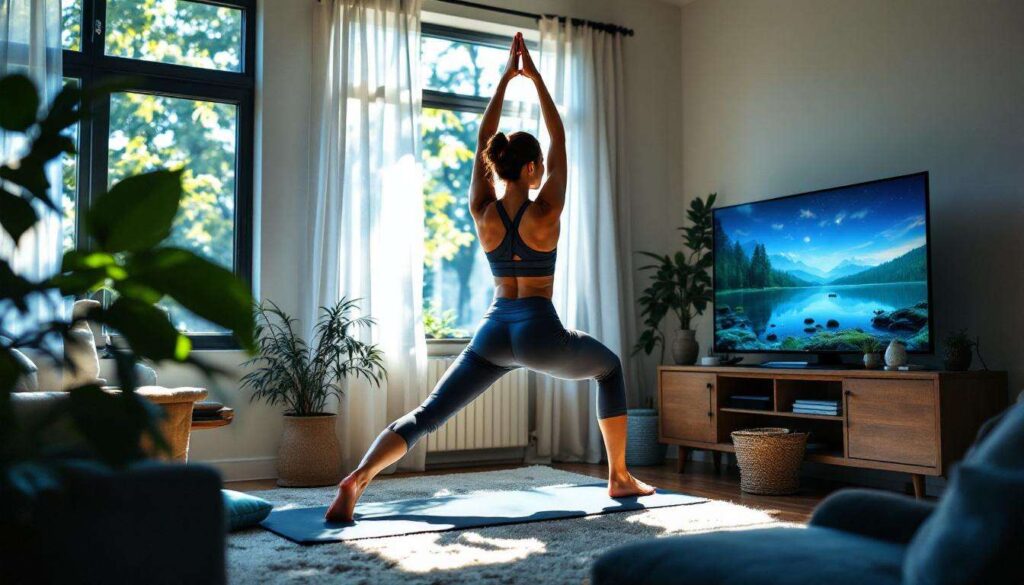
Stiffness after periods of inactivity can leave the body feeling sluggish and uncomfortable. Whether from long hours sitting at a desk, reduced movement during colder months, or simply the aftermath of a sedentary spell, the need for gentle, accessible exercise becomes evident. Pilates offers a practical solution that requires minimal space and equipment, making it ideal for fitting into daily life. This six-move routine can be performed in the comfort of your living room, allowing you to engage your core and improve flexibility whilst enjoying your favourite television programme.
Introduction to Pilates in front of the television
The convenience of home-based exercise
Pilates has gained recognition as a low-impact exercise method that focuses on controlled movements, breathing, and core engagement. Practising in front of the television removes common barriers to exercise, such as time constraints and the need for gym memberships. This approach allows individuals to integrate fitness seamlessly into their daily routines without sacrificing comfort or convenience.
Accessibility for all fitness levels
One of the greatest advantages of Pilates is its adaptability. The movements can be modified to suit various fitness levels, making them appropriate for beginners and those returning to exercise after a break. The routine outlined here requires no specialised equipment, only a comfortable surface and perhaps a cushion for added support. Key benefits include:
- No need for expensive gym equipment or memberships
- Ability to pause and resume as needed
- Comfortable environment that encourages consistency
- Minimal time commitment whilst watching television
Understanding the specific benefits of Pilates movements helps clarify why this practice proves particularly effective for addressing stiffness and core weakness.
The benefits of Pilates movements
Core engagement and stability
Pilates places significant emphasis on core activation, which encompasses not only the abdominal muscles but also the deeper stabilising muscles of the torso. Regular practice strengthens these muscles, leading to improved posture and reduced lower back discomfort. The controlled nature of Pilates movements ensures that the core remains engaged throughout each exercise, maximising effectiveness whilst minimising injury risk.
Enhanced flexibility and range of motion
Stiffness often results from limited movement patterns and prolonged static positions. Pilates addresses this through dynamic stretching and controlled movements that gently extend the body’s range of motion. The following table illustrates common areas of stiffness and how Pilates movements target them:
| Area of stiffness | Pilates benefit | Typical improvement timeframe |
|---|---|---|
| Lower back | Strengthens supporting muscles and improves spinal mobility | 2-4 weeks with regular practice |
| Hip flexors | Increases flexibility through controlled leg movements | 3-5 weeks |
| Shoulders and neck | Reduces tension through mindful movement and breathing | 1-3 weeks |
| Hamstrings | Lengthens muscles through gradual stretching | 4-6 weeks |
Mind-body connection and breathing
Beyond physical benefits, Pilates cultivates awareness of body positioning and movement quality. The emphasis on coordinated breathing enhances oxygen flow to muscles, promoting relaxation whilst maintaining engagement. This mindful approach distinguishes Pilates from more vigorous exercise forms, making it particularly suitable for evening routines or recovery days.
With these benefits in mind, the specific movements that comprise an effective beginner routine can now be explored in detail.
Six-move routine adapted for beginners
Seated spinal twist
This movement targets spinal mobility and engages the oblique muscles. Begin by sitting upright on the floor with legs crossed or extended, maintaining tall posture through the spine. Place hands behind the head or across the chest. Engage the core and rotate the torso to one side, holding briefly before returning to centre and repeating on the opposite side. Perform three sets of 10-12 repetitions with 30-60 seconds rest between sets.
Toe tap
The toe tap exercise strengthens the lower abdominals whilst maintaining spinal stability. Lie on your back with knees bent and feet lifted so that shins are parallel to the floor. Keep the core engaged to prevent the lower back from arching. Slowly lower one foot to tap the floor, then return to the starting position. Alternate legs for three sets of 10-12 repetitions per side.
Side-lying clam
This movement activates the gluteal muscles and hip stabilisers. Lie on one side with knees bent at approximately 45 degrees, feet together. Keep the pelvis stable and lift the top knee whilst maintaining foot contact. Focus on controlled movement rather than range. Complete three sets of 10-12 repetitions on each side, resting as needed.
One-leg circle
Leg circles improve hip mobility and core control. Lie flat on your back with one leg extended towards the ceiling and the other flat on the floor. Draw small circles in the air with the raised leg, keeping the pelvis stable throughout. Perform five circles in each direction before switching legs. Complete three sets on each side.
Bird dog
The bird dog exercise challenges balance and coordination whilst strengthening the entire core. Begin on hands and knees with a neutral spine. Simultaneously extend one arm forward and the opposite leg back, maintaining level hips and shoulders. Hold briefly before returning to the starting position. Perform three sets of 10-12 repetitions, alternating sides.
Pelvic curl
This foundational movement strengthens the posterior chain whilst mobilising the spine. Lie on your back with knees bent and feet flat on the floor, hip-width apart. Gradually lift the pelvis, articulating through the spine to create a straight line from shoulders to knees. Lower with control, reversing the spinal articulation. Complete three sets of 10-12 repetitions.
Executing these movements correctly requires attention to form and technique, which can be enhanced through specific practical strategies.
Tips to maximise the effectiveness of the movements
Focus on quality over quantity
Pilates emphasises precision and control rather than speed or repetition count. Performing fewer repetitions with proper form yields better results than rushing through movements with compromised technique. Pay attention to alignment, breathing, and muscle engagement throughout each exercise.
Maintain consistent breathing patterns
Coordinated breathing enhances movement quality and prevents unnecessary tension. Generally, exhale during the exertion phase of each movement and inhale during the release. For example, exhale whilst lifting in the pelvic curl and inhale whilst lowering. Never hold your breath, as this increases internal pressure and reduces oxygen delivery to working muscles.
Create a suitable practice environment
Whilst the routine can be performed in front of the television, certain environmental factors enhance effectiveness:
- Use a yoga mat or thick towel for cushioning and stability
- Ensure adequate space to extend arms and legs fully
- Wear comfortable, non-restrictive clothing
- Keep water nearby for hydration
- Adjust television volume to remain aware of body signals
Progress gradually and listen to your body
Begin with fewer sets or repetitions if needed, gradually increasing as strength and endurance improve. Mild muscle fatigue is expected, but sharp pain indicates the need to modify or stop. Consistency matters more than intensity when building foundational strength and flexibility.
Incorporating this routine into daily life requires strategic planning to ensure long-term adherence and continued improvement.
Daily routine to improve flexibility
Establishing a consistent practice schedule
Regularity proves more beneficial than sporadic intensive sessions. Aim to complete the six-move routine at least three to four times per week, ideally at the same time each day to establish a habit. Evening practice works well for many individuals, as it can be combined with television viewing and helps release accumulated tension from the day.
Tracking progress and adjusting intensity
Monitoring improvements in flexibility and core strength provides motivation and guides progression. Consider keeping a simple log noting:
- Date and time of practice
- Number of sets and repetitions completed
- Areas of particular stiffness or ease
- Overall energy levels before and after
As movements become easier, increase challenge by adding repetitions, slowing down the tempo, or incorporating small hand weights for certain exercises.
Complementing Pilates with other activities
Whilst this routine addresses core strength and flexibility effectively, combining it with other forms of movement enhances overall fitness. Walking, swimming, or gentle yoga provide cardiovascular benefits and additional flexibility work. The low-impact nature of Pilates makes it an excellent complement to more vigorous activities, serving as active recovery on rest days.
Beyond physical improvements, Pilates offers significant benefits for mental wellbeing and stress reduction.
Promoting relaxation through Pilates
Stress reduction through mindful movement
The focused nature of Pilates naturally encourages present-moment awareness, temporarily shifting attention away from daily stressors. The combination of controlled breathing and deliberate movement activates the parasympathetic nervous system, promoting a state of calm. This makes evening practice particularly valuable for unwinding before sleep.
Reducing physical tension patterns
Chronic stress often manifests as muscular tension, particularly in the neck, shoulders, and lower back. Regular Pilates practice addresses these patterns through gentle stretching and strengthening of affected areas. The seated spinal twist and pelvic curl specifically target common tension zones, providing relief whilst building resilience against future stiffness.
Improving sleep quality
Gentle exercise before bedtime can enhance sleep quality by releasing physical tension and promoting relaxation. The moderate intensity of this Pilates routine proves ideal for evening practice, providing sufficient activity to tire the body without overstimulation. Many practitioners report falling asleep more easily and experiencing fewer nighttime awakenings after establishing a regular Pilates routine.
This accessible six-move Pilates routine offers a practical solution for reducing stiffness and engaging the core without requiring significant time investment or equipment. The convenience of practising in front of the television removes common barriers to exercise, making consistency achievable even during busy periods. By focusing on controlled movements, proper breathing, and gradual progression, individuals of all fitness levels can experience improvements in flexibility, core strength, and overall wellbeing. The emphasis on quality over quantity ensures that even brief practice sessions yield meaningful benefits, whilst the relaxation aspects support both physical and mental health. Regular practice transforms these simple movements into powerful tools for maintaining mobility and vitality.