



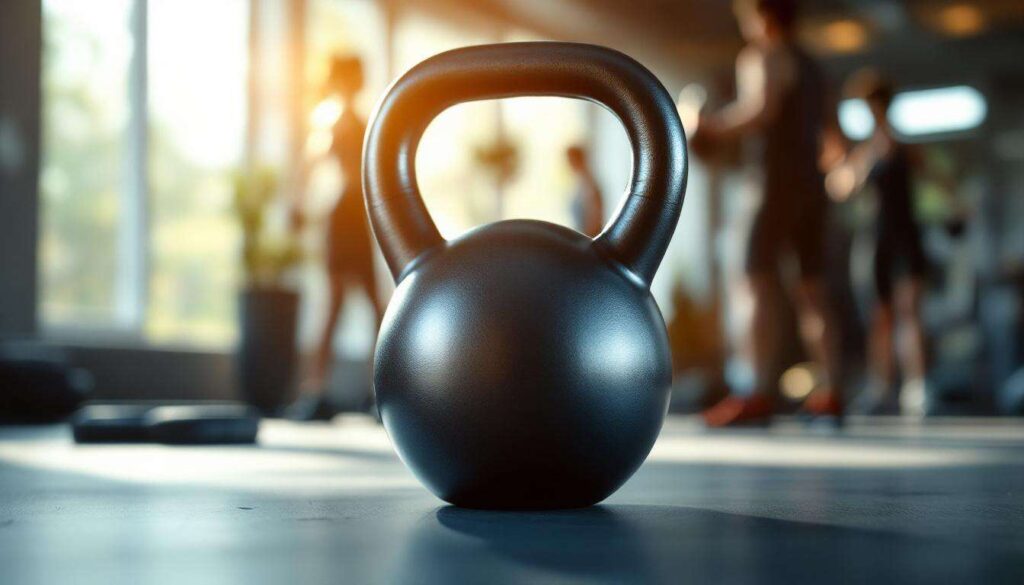
Building a strong, stable physique doesn’t require an elaborate gym setup or an arsenal of equipment. A single kettlebell and five carefully selected exercises can deliver remarkable results for strength, stability and core control. This compact piece of equipment offers a unique combination of cardiovascular conditioning and resistance training, making it an ideal choice for home workouts or minimalist training approaches. The dynamic nature of kettlebell exercises challenges multiple muscle groups simultaneously whilst demanding coordination and balance, creating a comprehensive workout that targets both primary movers and stabilising muscles.
Introduction to the kettlebell: a versatile tool
What makes the kettlebell unique
The kettlebell stands apart from traditional dumbbells and barbells due to its distinctive shape and offset centre of mass. This design feature forces the body to engage stabilising muscles throughout each movement, transforming simple exercises into full-body challenges. The handle placement allows for ballistic movements and swinging motions that are difficult or impossible to replicate with other equipment.
Practical advantages for home training
For those seeking efficient workouts without extensive equipment, the kettlebell presents several compelling benefits:
- Minimal space requirements compared to bulky machines or barbell setups
- Single piece of equipment capable of targeting all major muscle groups
- Scalable resistance suitable for beginners through to advanced practitioners
- Durable construction requiring little maintenance
- Cost-effective investment for long-term fitness goals
The versatility of this tool extends beyond basic strength training, incorporating elements of power development, muscular endurance and cardiovascular conditioning within a single session.
The benefits of the kettlebell for strength and stability
Functional strength development
Kettlebell training emphasises functional movement patterns that translate directly to everyday activities and athletic performance. Unlike isolation exercises performed on machines, kettlebell movements require the body to work as an integrated system. This approach develops strength that extends beyond the gym, improving capacity for lifting, carrying and manipulating objects in real-world scenarios.
Core engagement and postural control
Every kettlebell exercise demands continuous core activation to maintain proper form and control the implement throughout its range of motion. This constant engagement strengthens the deep stabilising muscles of the trunk, including the transverse abdominis and multifidus, which are essential for spinal health and injury prevention.
| Training aspect | Traditional weights | Kettlebell training |
|---|---|---|
| Core activation | Moderate | Constant and high |
| Stabiliser recruitment | Limited | Extensive |
| Movement variety | Standard planes | Multi-directional |
| Cardiovascular demand | Low to moderate | Moderate to high |
Enhanced coordination and balance
The offset load of a kettlebell challenges proprioception and balance systems, forcing the body to make constant micro-adjustments throughout each repetition. This develops neuromuscular coordination that improves overall athleticism and reduces injury risk during both training and daily activities.
Understanding these foundational benefits provides context for why the following five exercises form such an effective training protocol.
Exercise 1: the kettlebell deadlift
Proper execution and form
The kettlebell deadlift serves as the foundation for hip hinge movements, developing posterior chain strength whilst teaching proper lifting mechanics. Position the kettlebell between your feet, which should be hip-width apart. Hinge at the hips by pushing them backward whilst maintaining a neutral spine, then grip the handle with both hands. Drive through the heels to extend the hips and knees simultaneously, bringing the kettlebell to a standing position.
Muscles targeted and benefits
This fundamental movement pattern engages:
- Glutes and hamstrings as primary movers
- Erector spinae for spinal stabilisation
- Core musculature for maintaining trunk rigidity
- Grip strength through sustained handle contact
- Quadriceps for knee extension support
Common mistakes to avoid
Practitioners often compromise form by rounding the lower back or initiating the movement with the arms rather than the hips. Maintain tension throughout the posterior chain and ensure the kettlebell travels in a vertical path close to the body. The shoulders should remain packed and stable, avoiding excessive shrugging or forward rolling.
Once proficiency is established with the deadlift, progressing to dynamic movements becomes significantly safer and more effective.
Exercise 2: the single-arm swing for core stability
Mastering the hip hinge pattern
The single-arm kettlebell swing builds upon the deadlift foundation, adding ballistic momentum and unilateral challenge. Begin with the kettlebell positioned slightly ahead of the body. Hike the implement back between the legs whilst maintaining a proud chest, then explosively extend the hips to propel the kettlebell forward. The arm serves merely as a connection point; hip drive generates the movement.
Anti-rotation core demands
Performing swings with a single arm creates significant rotational forces that the core must resist. This anti-rotation challenge strengthens the obliques and deep stabilisers far more effectively than traditional crunches or sit-ups. The body must work to maintain square hips and shoulders despite the asymmetrical load.
Programming considerations
Begin with conservative volume to allow the body to adapt to the ballistic nature of swings:
- Start with 10-15 repetitions per arm
- Focus on crisp hip snaps rather than muscling the weight
- Maintain rhythmic breathing, exhaling forcefully at the top of each swing
- Rest adequately between sets to preserve technique quality
The explosive nature of swings naturally leads into exercises requiring overhead stability and control.
Exercise 3: the overhead reverse lunge
Setup and execution technique
The overhead reverse lunge combines lower body strength with shoulder stability and core control. Press the kettlebell overhead with one arm, achieving full elbow lockout. Step backward with the leg on the same side as the kettlebell, lowering until both knees reach approximately 90 degrees. The free arm extends laterally for balance. Drive through the front heel to return to standing whilst maintaining the overhead position throughout.
Comprehensive muscular engagement
This complex movement pattern demands coordination across multiple body segments:
| Body region | Primary muscles engaged | Function |
|---|---|---|
| Lower body | Quadriceps, glutes, hamstrings | Propulsion and deceleration |
| Shoulder complex | Deltoids, rotator cuff | Overhead stabilisation |
| Core | Obliques, transverse abdominis | Anti-lateral flexion |
| Upper back | Trapezius, rhomboids | Scapular stability |
Progression and regression options
For those new to overhead work, begin by holding the kettlebell in the rack position at shoulder height rather than overhead. This reduces the stability demands whilst still challenging the lower body and core. Advanced practitioners can increase difficulty by adding a pause at the bottom position or performing walking lunges rather than returning to the starting point between repetitions.
Having established proficiency with these three foundational exercises, integrating them into a structured training approach maximises their effectiveness.
Training plan for a complete routine
Session structure and timing
An effective kettlebell workout follows a circuit-style format that maintains elevated heart rate whilst allowing specific muscle groups adequate recovery. Perform each exercise sequentially with minimal rest between movements. Complete all five exercises before resting for 60-90 seconds, then repeat for 3-5 total rounds depending on fitness level and time availability.
Recommended repetition ranges
Structure your training session using these guidelines:
- Kettlebell deadlifts: 12-15 repetitions
- Single-arm swings: 10-12 repetitions per arm
- Overhead reverse lunges: 8-10 repetitions per leg
- Goblet squats: 12-15 repetitions
- Rotational movements: 10-12 repetitions per side
Weight selection principles
Choose a kettlebell weight that allows completion of all prescribed repetitions with proper form whilst experiencing fatigue during the final few repetitions of each set. For most individuals beginning kettlebell training, this typically ranges from 8-16 kg, though individual strength levels vary considerably. Progressive overload occurs through increased volume, reduced rest periods or heavier implements as adaptation occurs.
Frequency and recovery
Perform this complete routine 2-3 times weekly, allowing at least one rest day between sessions for adequate recovery. The full-body nature of kettlebell training requires more recovery time than isolation-focused programmes. Monitor performance quality and energy levels to determine optimal training frequency for your individual recovery capacity.
Kettlebell training delivers comprehensive fitness benefits through minimal equipment and time investment. The five exercises outlined create a balanced programme targeting strength, stability and core control through functional movement patterns. Consistency with proper technique yields progressive improvements in overall physical capacity, making the kettlebell an invaluable tool for sustainable fitness development. Whether training at home or supplementing gym-based programmes, this approach provides a foundation for long-term strength and conditioning success.