



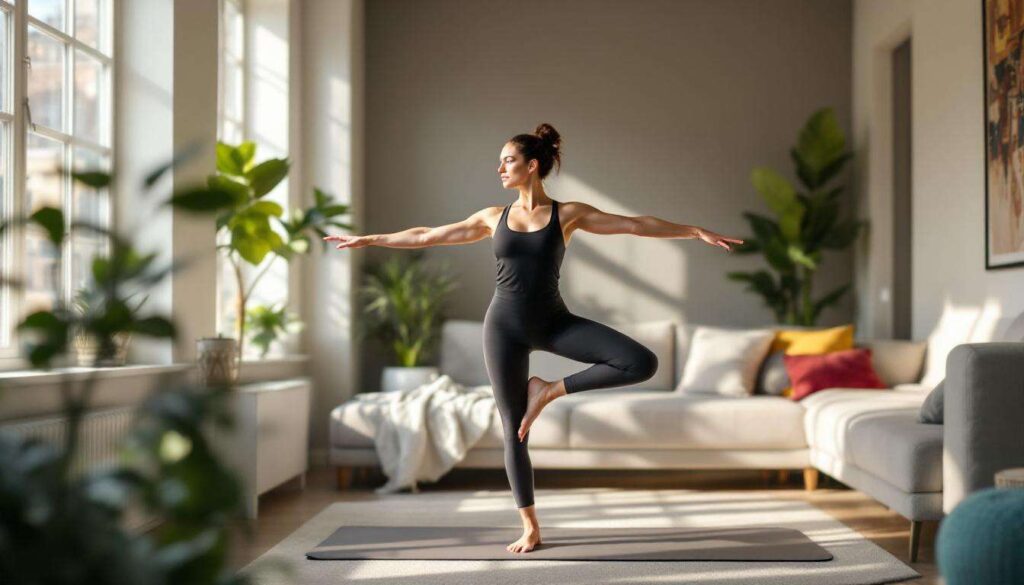
Maintaining balance and stability becomes increasingly important as we age, yet many people overlook the significance of targeted exercises until they experience their first stumble or fall. A carefully designed Pilates routine can address this concern effectively, offering a practical solution that requires minimal equipment and can be performed in the comfort of your own home. This 10-minute sequence focuses on strengthening the core muscles, improving proprioception, and enhancing overall body control to reduce the risk of falls whilst building confidence in everyday movements.
Introduction to the Pilates method for stability
Pilates represents a low-impact exercise system developed by Joseph Pilates in the early twentieth century, emphasising controlled movements, breath work, and mind-body connection. The method specifically targets the deep postural muscles that support the spine and pelvis, creating a foundation for improved stability throughout the entire body.
Core principles relevant to balance
The practice revolves around several fundamental concepts that directly contribute to better stability and fall prevention. Centring focuses attention on the powerhouse—the abdominal muscles, lower back, hips, and buttocks—which serves as the body’s natural stabiliser. Control ensures that every movement is deliberate and precise, training the neuromuscular system to respond appropriately during unexpected shifts in balance.
- Concentration: developing awareness of body position in space
- Precision: executing movements with exact alignment
- Flow: creating smooth transitions between positions
- Breathing: coordinating breath with movement to enhance control
Why Pilates excels at improving stability
Unlike traditional strength training that isolates individual muscle groups, Pilates engages multiple muscles simultaneously, mimicking the complex coordination required for maintaining balance in real-life situations. The exercises challenge both static and dynamic stability, preparing the body to respond effectively whether standing still or moving through space. This comprehensive approach addresses the root causes of instability rather than merely treating symptoms.
Understanding these foundational principles provides context for how a brief daily routine can yield substantial improvements in balance and confidence, setting the stage for exploring the specific advantages this practice offers.
Benefits of Pilates on balance
Regular Pilates practice delivers measurable improvements in balance through multiple physiological mechanisms. Research consistently demonstrates that participants who engage in Pilates exercises experience enhanced proprioception—the body’s ability to sense its position and movement in space—which is crucial for preventing falls.
Physical improvements from consistent practice
The method strengthens the intrinsic stabiliser muscles that often remain underdeveloped through conventional exercise. These deep muscles, including the transversus abdominis, multifidus, and pelvic floor, work continuously to maintain upright posture and respond to balance challenges. Additionally, Pilates improves ankle stability and hip strength, two critical areas for fall prevention.
| Benefit | Impact on stability | Timeframe |
|---|---|---|
| Core strength | Improved postural control | 2-4 weeks |
| Proprioception | Better spatial awareness | 3-6 weeks |
| Flexibility | Enhanced range of motion | 4-8 weeks |
| Reaction time | Faster balance corrections | 6-12 weeks |
Mental and neurological advantages
Beyond physical conditioning, Pilates cultivates mental focus and body awareness that translate directly into improved balance. The concentration required during practice enhances neural pathways between the brain and muscles, creating more efficient communication for balance responses. This mind-body connection proves particularly valuable when navigating uneven surfaces or recovering from unexpected perturbations.
With these benefits clearly established, examining the specific routine designed to harness these advantages becomes the logical next step in creating a practical fall-prevention programme.
Presentation of the 10-minute routine
This carefully structured sequence comprises six exercises performed in a flowing progression, each targeting essential components of balance and stability. The routine requires only a yoga mat or comfortable floor surface and can be modified to suit various fitness levels.
Structure and timing
The 10-minute format divides as follows: a brief warm-up incorporating breathing and gentle spinal movements (2 minutes), four core stability exercises (6 minutes), and a cool-down with stretching (2 minutes). Each exercise is performed for 60 to 90 seconds, allowing sufficient time to establish proper form whilst maintaining an efficient pace.
- Warm-up: pelvic tilts and spine curls
- Exercise 1: single-leg circles
- Exercise 2: modified plank with leg lifts
- Exercise 3: side-lying leg series
- Exercise 4: standing balance with arm reaches
- Cool-down: seated spinal twist and hamstring stretch
Progression principles
The routine follows a gradual progression from stable to challenging positions. Beginning with supine exercises provides maximum support whilst building foundational strength. As the sequence advances, positions become progressively more demanding, culminating in standing balance work that directly translates to functional stability. This systematic approach ensures safety whilst maximising effectiveness.
Understanding the overall structure provides a framework for exploring the specific exercises that target the muscles most crucial for preventing falls and maintaining stability.
Targeted exercises for stabilising muscles
Each exercise in this routine addresses specific muscle groups and movement patterns essential for maintaining balance in daily activities. The selection prioritises functional movements that replicate real-world balance challenges.
Single-leg circles for hip stability
Lying supine with one leg extended towards the ceiling, this exercise involves drawing controlled circles with the raised foot whilst keeping the pelvis completely still. The movement strengthens the hip flexors, abductors, and adductors whilst challenging core stability. Performing five circles in each direction per leg develops the muscular control necessary for single-leg stance activities such as climbing stairs or stepping over obstacles.
Modified plank with alternating leg lifts
From a forearm plank position, alternately lifting one leg at a time creates an asymmetrical load that demands exceptional core engagement and shoulder stability. This exercise specifically targets the transversus abdominis, obliques, and gluteus medius—muscles that prevent lateral sway during walking. Maintaining proper alignment for eight to ten repetitions per side builds the endurance these muscles require for prolonged standing or walking.
Side-lying leg series for lateral stability
Positioned on one side with the body in a straight line, this sequence includes leg lifts, circles, and forward-backward movements. These actions strengthen the hip abductors and external rotators, which are critical for preventing sideways falls and maintaining a steady gait. The gluteus medius, in particular, receives intensive conditioning through these movements.
Standing balance with reaching movements
The final exercise integrates all previously activated muscle groups in a functional standing position. Balancing on one leg whilst reaching the arms in various directions mimics real-life scenarios such as reaching for items on shelves or turning to look behind. This exercise develops dynamic balance and reactive stability, training the body to maintain equilibrium during movement.
Mastering these exercises provides the physical foundation for improved stability, but consistent practice requires thoughtful integration into everyday routines to yield lasting benefits.
Tips for integrating the routine into daily life
Establishing a sustainable practice requires strategic planning and realistic goal-setting. The compact nature of this routine facilitates incorporation into even the busiest schedules when approached with intentionality and flexibility.
Optimal timing and frequency
Performing the routine three to five times weekly produces noticeable improvements in balance and stability. Morning sessions often prove most successful, as they establish a consistent pattern before daily obligations accumulate. However, the routine can be effectively practised at any time when energy levels are adequate and distractions are minimal.
- Link the routine to an existing habit, such as morning coffee or evening news
- Set a recurring calendar reminder with a specific time allocation
- Prepare the exercise space the night before to reduce morning friction
- Track completion using a simple calendar or habit-tracking application
Adapting to individual circumstances
Modifications ensure the routine remains accessible regardless of current fitness level or physical limitations. Individuals with significant balance concerns can perform exercises near a wall or sturdy chair for additional support. Those with greater strength may increase repetitions or add light ankle weights to intensify the challenge. The key lies in maintaining proper form rather than rushing through movements.
Whilst consistent practice builds strength and confidence, understanding essential safety measures ensures that the routine itself does not inadvertently contribute to fall risk.
Precautions to avoid falls
Safety considerations must guide both the exercise practice itself and the broader home environment where falls might occur. A comprehensive approach addresses multiple risk factors simultaneously.
Exercise-specific safety measures
Always perform the routine in a clear, uncluttered space with adequate lighting and a non-slip surface. Keep a sturdy chair or wall within arm’s reach during standing exercises, particularly when first learning the movements. Never push through sharp pain or dizziness, as these symptoms indicate the need for modification or medical consultation. Wearing appropriate footwear—either non-slip socks or barefoot—prevents sliding whilst maintaining sensory feedback from the feet.
Environmental modifications for fall prevention
Beyond the exercise routine, creating a safer home environment significantly reduces fall risk. Remove loose rugs, secure electrical cords, and ensure adequate lighting throughout living spaces. Installing grab bars in bathrooms and handrails on staircases provides crucial support during vulnerable moments.
- Arrange furniture to create clear walking paths
- Store frequently used items at easily accessible heights
- Address vision problems promptly with appropriate corrective lenses
- Review medications with healthcare providers, as some increase fall risk
- Maintain regular check-ups to monitor conditions affecting balance
Combining this targeted Pilates routine with thoughtful environmental modifications and consistent practice creates a robust defence against falls, enhancing both physical capability and confidence in daily movements.
This 10-minute Pilates routine offers a practical, evidence-based approach to improving stability and reducing fall risk through targeted exercises that strengthen essential stabilising muscles. The method’s emphasis on core control, proprioception, and functional movement patterns addresses the root causes of balance difficulties whilst requiring minimal time and equipment. By incorporating these exercises into a regular schedule alongside appropriate safety precautions and environmental modifications, individuals can significantly enhance their stability, confidence, and independence in daily activities. The compact format removes common barriers to consistent practice, making fall prevention accessible to anyone committed to maintaining their mobility and wellbeing.