

When Margaret Thompson walked into the passport office to renew her travel document, the clerk raised an eyebrow at her request for a ten-year validity. At 92 years old, Margaret’s confidence in her future sparked both admiration and curiosity. Her secret lies not in genetics or luck, but in a disciplined exercise routine that has kept her mobile, mentally sharp, and remarkably independent. Her story offers valuable insights into how physical activity can transform the ageing experience, proving that it’s never too late to prioritise one’s health and wellbeing.
The inspiring story of a dynamic nonagenarian
A lifetime of movement
Margaret’s relationship with exercise began in her youth, but it wasn’t until her late sixties that she truly embraced a structured fitness regimen. After losing her husband and facing the prospect of living alone, she made a conscious decision to maintain her independence through physical strength. Her journey demonstrates that commitment to health can begin at any stage of life.
Breaking stereotypes about ageing
Society often views nonagenarians as frail and dependent, yet Margaret challenges these assumptions daily. She lives independently in her two-storey home, tends to her garden, and travels regularly to visit family across the country. Her achievements include:
- Completing a charity walk for her local hospice at age 89
- Maintaining her driving licence with regular assessments
- Volunteering at a community centre twice weekly
- Managing all household tasks without assistance
Margaret’s vitality stems from her refusal to accept age as a limitation. This mindset, combined with consistent physical activity, has allowed her to maintain a quality of life that many younger individuals might envy. Her approach to daily fitness reveals practical strategies that contribute to her remarkable health.
Her daily routine: the secret to her vitality
Morning exercises that set the tone
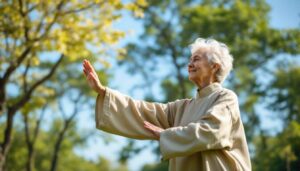
Margaret begins each day with a 20-minute stretching session before breakfast. She focuses on flexibility exercises that keep her joints mobile and reduce stiffness. Her routine includes gentle yoga poses adapted for her abilities, emphasising movements that maintain balance and core strength. She credits this morning ritual with providing the energy and focus she needs throughout the day.
Structured weekly activities
Her exercise programme extends beyond morning stretches to include varied activities throughout the week:
| Day | Activity | Duration |
|---|---|---|
| Monday | Aqua aerobics class | 45 minutes |
| Wednesday | Walking group | 60 minutes |
| Friday | Chair-based strength training | 30 minutes |
| Daily | Garden work | Variable |
The role of social connection
Margaret emphasises that her group exercise classes provide more than physical benefits. The social interaction keeps her mentally engaged and accountable. Her walking group has become a circle of friends who support each other’s fitness goals whilst enjoying conversations and shared experiences. This combination of physical and social activity creates a comprehensive approach to wellbeing. Understanding the scientific basis for her success helps explain why her routine proves so effective.
The benefits of exercise on senior health
Physical advantages backed by research
Medical research consistently demonstrates that regular physical activity provides numerous benefits for older adults. Margaret’s experience aligns with scientific findings that show exercise can:
- Reduce the risk of falls by improving balance and coordination
- Maintain bone density and combat osteoporosis
- Lower blood pressure and improve cardiovascular health
- Enhance muscle strength and joint flexibility
- Support better sleep quality and duration
Cognitive and mental health improvements
Beyond physical benefits, Margaret’s mental acuity remains impressive. Studies indicate that regular exercise increases blood flow to the brain, potentially reducing the risk of cognitive decline and dementia. Margaret herself notes that she feels sharper and more focused on days when she exercises, attributing her excellent memory and quick wit partly to her active lifestyle.
Independence and quality of life
Perhaps the most significant benefit Margaret experiences is maintained independence. Her ability to perform daily tasks without assistance stems directly from her physical capabilities. This autonomy contributes to her self-esteem and overall life satisfaction, creating a positive cycle where good health enables enjoyable activities, which in turn motivate continued fitness efforts. Yet maintaining such dedication requires more than understanding benefits alone.
How she maintains her motivation at 92
Setting realistic and meaningful goals
Margaret doesn’t aim to run marathons or lift heavy weights. Instead, she sets achievable targets that matter to her personally. Her goal of renewing her passport for another decade exemplifies this approach—it’s specific, meaningful, and tied to her desire to continue travelling. She also sets smaller weekly goals, such as completing all her scheduled classes or walking a certain distance.
Tracking progress and celebrating achievements
She maintains a simple diary where she records her activities and how she feels afterwards. This practice helps her notice improvements and provides tangible evidence of her commitment. When she reaches milestones, such as attending 50 consecutive aqua aerobics classes, she treats herself to something special, reinforcing the positive association with exercise.
Adapting rather than abandoning
Margaret acknowledges that her abilities have changed over time. Rather than viewing this as failure, she modifies her activities to suit her current capabilities. When arthritis made certain movements difficult, she switched from high-impact exercises to water-based activities. This flexibility prevents frustration and ensures her routine remains sustainable. Her example highlights broader principles about the role of activity in later life.
The importance of staying active as you age
Counteracting natural decline
Ageing naturally brings physical changes, including muscle loss, decreased bone density, and reduced cardiovascular efficiency. However, regular exercise can significantly slow these processes. Margaret’s strength and mobility at 92 demonstrate that whilst we cannot stop ageing, we can influence how we age. Her body functions more like that of someone decades younger precisely because she has consistently challenged it.
Preventing chronic conditions
Many common age-related health issues can be prevented or managed through physical activity. Margaret has avoided several conditions that affect her peers:
- Type 2 diabetes, through maintained insulin sensitivity
- Severe arthritis, by keeping joints mobile
- Depression and anxiety, through endorphin release and social engagement
- Cardiovascular disease, through improved heart health
Economic and societal benefits
Margaret’s independence means she requires minimal healthcare intervention and no daily care assistance. This reduces strain on healthcare systems and family members whilst preserving her dignity and autonomy. Her example suggests that promoting senior fitness could yield substantial societal benefits, from reduced healthcare costs to enhanced intergenerational relationships. For those inspired by her example, practical steps can help establish similar habits.
Tips for adopting an exercise routine at any age
Starting safely and sensibly
Margaret advises consulting healthcare professionals before beginning any new exercise programme, particularly for those with existing health conditions. A proper assessment can identify appropriate activities and necessary modifications. She recommends starting with just 10 minutes daily and gradually increasing duration and intensity as fitness improves.
Choosing enjoyable activities
Sustainability depends on enjoyment. Margaret suggests trying various activities to discover what feels pleasant rather than burdensome. Options for older adults include:
- Swimming or water aerobics for low-impact cardiovascular exercise
- Tai chi for balance and mindfulness
- Walking groups for social connection and fresh air
- Chair-based exercises for those with limited mobility
- Gardening for functional strength training
- Dancing for coordination and joy
Building support systems
Margaret credits her success partly to her supportive network. She encourages others to find exercise partners, join classes, or involve family members. Accountability and encouragement make adherence easier, whilst shared experiences enhance motivation. She also suggests working with fitness professionals who understand senior needs and can provide appropriate guidance.
Margaret Thompson’s remarkable vitality at 92 stems from decades of consistent physical activity adapted to her changing needs. Her daily stretching, regular classes, and social exercise groups maintain her strength, balance, and mental sharpness whilst preventing common age-related conditions. Her story demonstrates that exercise benefits extend beyond physical health to encompass independence, cognitive function, and quality of life. By setting realistic goals, tracking progress, and adapting activities as needed, she has created a sustainable routine that supports her active lifestyle. Her decision to renew her passport reflects confidence earned through commitment to fitness, proving that age need not limit ambition or capability when supported by appropriate physical activity.