
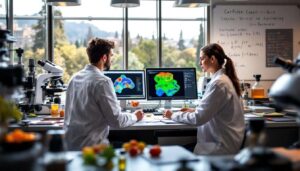



Ageing joints have long been considered a one-way street towards deterioration, with cartilage loss leading to painful conditions that affect millions worldwide. Scientists at Stanford University have now achieved what many thought impossible: successfully regrowing cartilage in ageing joints whilst simultaneously preventing the onset of arthritis. This groundbreaking medical advancement represents a paradigm shift in how researchers approach joint degeneration, offering hope to those facing mobility issues and chronic pain. The discovery centres on manipulating specific biological pathways that can reverse the natural decline of cartilage tissue, opening unprecedented possibilities for regenerative medicine.
Revolutionary discovery by Stanford researchers
The scientific breakthrough
Stanford University’s research team has identified a molecular mechanism that enables cartilage regeneration in joints that have already begun deteriorating. The scientists discovered that by targeting a particular protein pathway, they could stimulate dormant stem cells within joint tissue to produce new cartilage. This finding challenges the long-held belief that cartilage, once damaged, cannot repair itself in adult organisms. The research, conducted over several years, involved both laboratory studies and animal models that demonstrated consistent results across various age groups.
Key components of the discovery
The breakthrough relies on understanding how cartilage-producing cells, known as chondrocytes, respond to specific biological signals. The Stanford team identified several critical elements:
- A protein called FOXO that regulates cellular ageing processes
- Skeletal stem cells that retain regenerative capacity even in older joints
- Signalling pathways that can be reactivated through targeted intervention
- Microenvironmental factors that influence cell behaviour and tissue formation
These components work together in a coordinated system that can effectively turn back the biological clock within joint tissues, restoring function that was previously thought permanently lost.
Understanding how these elements interact provides the foundation for developing practical treatments that could benefit millions of patients worldwide.
The cartilage regeneration process explained
Biological mechanisms at work
The regeneration process begins when researchers introduce specific molecular signals into the joint environment. These signals activate skeletal stem cells that reside within the joint space but typically remain inactive in ageing individuals. Once activated, these cells differentiate into chondrocytes, which then produce the extracellular matrix that forms healthy cartilage tissue. The process mimics natural development but occurs in joints that have already experienced significant wear and deterioration.
Stages of cartilage restoration
| Stage | Duration | Key Activity |
|---|---|---|
| Activation | 1-2 weeks | Stem cell awakening and proliferation |
| Differentiation | 3-4 weeks | Cell specialisation into chondrocytes |
| Matrix production | 6-8 weeks | Cartilage tissue formation and integration |
| Maturation | 3-6 months | Tissue strengthening and functional recovery |
Cellular communication and tissue integration
The newly formed cartilage must integrate seamlessly with existing tissue to provide functional benefits. This requires precise cellular communication between old and new cells, ensuring that the regenerated tissue matches the mechanical properties of healthy cartilage. The Stanford researchers discovered that certain growth factors facilitate this integration, creating a stable and durable repair that withstands the mechanical stresses of daily movement.
These intricate biological processes demonstrate how targeted interventions can achieve results that natural healing mechanisms cannot accomplish alone in aged tissues.
Potential applications for treating arthritis
Addressing osteoarthritis
Osteoarthritis, the most common form of arthritis, affects over 32.5 million adults in developed countries alone. The Stanford discovery offers a direct approach to treating this condition by regenerating the cartilage that osteoarthritis destroys. Unlike current treatments that merely manage symptoms, this regenerative approach addresses the root cause of the disease. Patients could potentially avoid joint replacement surgery, which carries significant risks and requires lengthy recovery periods.
Preventive strategies
Beyond treating existing arthritis, the research suggests possibilities for preventive interventions. Individuals showing early signs of cartilage deterioration could receive treatments that halt or reverse the process before arthritis develops. This preventive approach would particularly benefit:
- Athletes with repetitive joint stress from high-impact activities
- Individuals with genetic predispositions to joint diseases
- Workers in physically demanding occupations that strain joints
- People recovering from joint injuries that increase arthritis risk
Expanding treatment options
The regenerative technique could complement or replace existing arthritis treatments, offering doctors a broader therapeutic toolkit. Current options such as anti-inflammatory medications, physical therapy, and corticosteroid injections provide temporary relief but do not restore lost cartilage. The Stanford approach could be combined with these treatments or used independently, depending on disease severity and patient circumstances.
The versatility of this regenerative approach positions it as a transformative option for managing joint health across different patient populations and disease stages.
Benefits for elderly individuals
Restoring mobility and independence
Elderly individuals stand to gain tremendously from cartilage regeneration technology. Joint deterioration significantly impacts quality of life, limiting mobility and forcing many older adults to depend on others for daily activities. By regrowing functional cartilage, this treatment could restore independence and enable seniors to maintain active lifestyles. The psychological benefits of regained mobility extend beyond physical health, contributing to improved mental wellbeing and social engagement.
Reducing healthcare burden
The economic implications of effective cartilage regeneration are substantial. Joint replacement surgeries cost healthcare systems billions annually, and post-operative care requires extensive resources. A regenerative alternative could significantly reduce these costs whilst delivering superior outcomes. Additionally, by preventing arthritis development, the treatment could decrease the overall prevalence of joint-related disabilities in ageing populations.
Quality of life improvements
| Aspect | Before Treatment | After Treatment |
|---|---|---|
| Pain levels | Chronic, severe | Minimal or absent |
| Mobility range | Significantly limited | Near-normal function |
| Daily activities | Assistance required | Independent performance |
| Medication needs | Multiple pain relievers | Reduced or eliminated |
These tangible improvements demonstrate how regenerative medicine can address not just biological problems but also enhance overall human wellbeing in later life stages.
Future perspectives and challenges
Clinical trial progression
Whilst laboratory and animal studies show promising results, human clinical trials represent the next critical phase. Researchers must demonstrate that the technique works safely and effectively in diverse human populations. These trials will examine long-term outcomes, potential side effects, and optimal treatment protocols. The regulatory approval process requires extensive documentation and rigorous safety assessments before the treatment becomes widely available.
Technical and biological obstacles
Several challenges must be addressed before cartilage regeneration becomes standard practice. Individual variations in biology mean that treatments may work differently across patients, requiring personalised approaches. Additionally, the technique must prove effective in severely damaged joints, not just those with early-stage deterioration. Scientists continue investigating:
- Optimal delivery methods for therapeutic molecules into joint spaces
- Strategies to enhance regeneration in severely arthritic joints
- Techniques to ensure regenerated cartilage remains stable over decades
- Methods to make treatments accessible and affordable for broad populations
Scaling and accessibility considerations
Transforming a laboratory discovery into a widely available treatment requires substantial infrastructure development. Manufacturing facilities must produce therapeutic agents at scale whilst maintaining quality standards. Healthcare providers need training in administration techniques, and insurance systems must determine coverage policies. These practical considerations will significantly influence how quickly patients can access this revolutionary treatment.
Addressing these multifaceted challenges will determine whether this scientific breakthrough translates into real-world benefits for the millions suffering from joint deterioration.
Impact on medicine and scientific research
Advancing regenerative medicine
The Stanford cartilage regeneration discovery extends beyond arthritis treatment, contributing to the broader field of regenerative medicine. The principles underlying this research could apply to other tissues that traditionally resist repair, such as heart muscle following cardiac events or neural tissue after brain injuries. By demonstrating that aged tissues can be coaxed into regeneration, this work challenges fundamental assumptions about biological limitations and opens new research directions.
Inspiring related research
This breakthrough has catalysed increased interest and funding in tissue regeneration studies worldwide. Research institutions are exploring similar approaches for various degenerative conditions, creating a collaborative environment that accelerates discovery. The methodological innovations developed by the Stanford team provide templates that other researchers can adapt, potentially speeding progress across multiple medical disciplines.
Changing treatment paradigms
The success of cartilage regeneration may shift medical philosophy from symptom management towards curative interventions. This paradigm change could influence how healthcare systems allocate resources, potentially prioritising regenerative treatments over palliative care. Medical education may increasingly emphasise regenerative approaches, preparing future doctors to utilise these advanced techniques as standard components of their therapeutic arsenal.
The Stanford research team’s achievement in regrowing cartilage within ageing joints represents a watershed moment for medical science and patient care. By identifying the molecular mechanisms that enable cartilage regeneration and demonstrating practical methods to activate these processes, researchers have opened pathways to treating and preventing arthritis in ways previously confined to science fiction. The potential benefits for elderly individuals facing joint deterioration are profound, promising restored mobility, reduced pain, and enhanced quality of life. Whilst challenges remain in translating laboratory success into widespread clinical application, the foundational work is complete. This discovery not only addresses a pressing medical need affecting millions but also exemplifies how persistent scientific inquiry can overcome seemingly insurmountable biological barriers, ultimately transforming human health outcomes.