



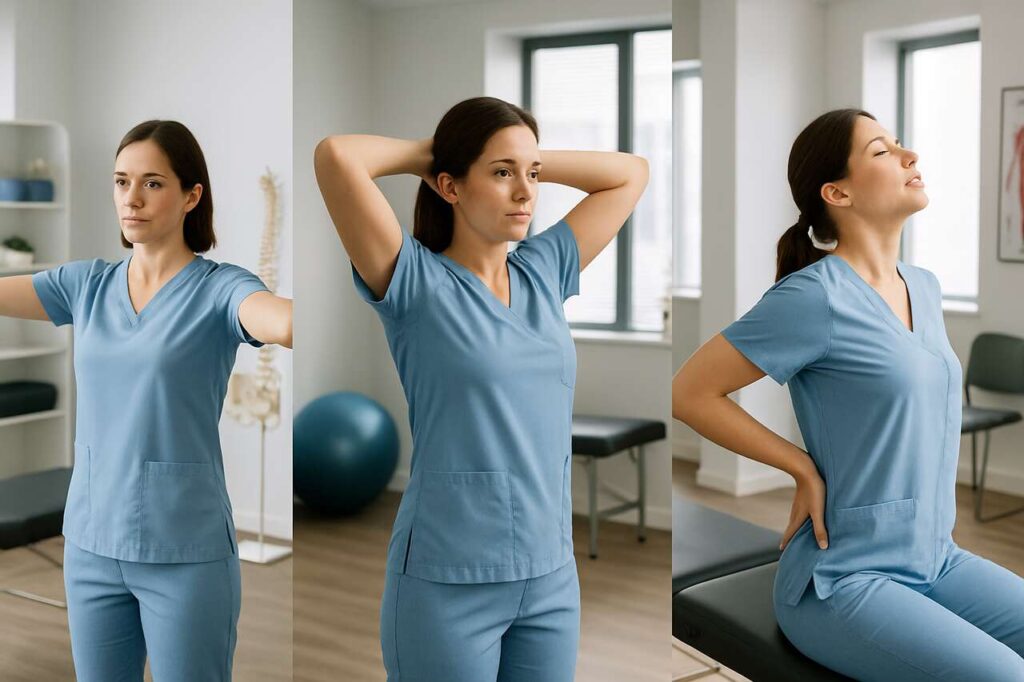
Modern office environments have transformed the way millions of people work, but this shift towards desk-based employment has created a significant health challenge. Prolonged sitting compresses the spine, weakens core muscles, and restricts blood flow throughout the body. Physical therapists have identified three essential movements that can counteract these negative effects, offering a practical solution for those spending hours at their desks. These exercises target the specific areas most affected by sedentary work, helping to restore mobility and prevent long-term musculoskeletal problems.
The danger of daily sedentary behaviour
Understanding the physiological impact
Sitting for extended periods creates a cascade of physiological changes that affect multiple body systems. The human body was designed for regular movement, yet the average office worker spends between eight and twelve hours seated daily. This prolonged immobility causes the hip flexors to shorten and tighten, whilst the glutes and hamstrings become weak and underactive. The spine bears excessive pressure in a seated position, with intervertebral discs experiencing up to 40% more compression than when standing.
Cardiovascular and metabolic consequences
Beyond musculoskeletal concerns, sedentary behaviour significantly impacts cardiovascular health and metabolic function. Research has identified several concerning trends amongst desk-based workers:
- Reduced circulation leading to increased risk of deep vein thrombosis
- Decreased insulin sensitivity affecting blood sugar regulation
- Elevated cholesterol levels due to reduced lipoprotein lipase activity
- Increased inflammation markers throughout the body
- Higher blood pressure readings compared to active individuals
These findings underscore the importance of incorporating regular movement into daily routines, particularly for those in sedentary occupations. The relationship between extended sitting and chronic disease has become increasingly clear through longitudinal studies tracking office workers over decades.
The adverse effects of inadequate movement
Postural deterioration and muscle imbalances
The most visible consequence of prolonged sitting manifests in postural abnormalities that develop gradually over time. Forward head posture, rounded shoulders, and excessive thoracic kyphosis become increasingly pronounced as muscles adapt to sustained positions. The anterior chest muscles tighten whilst the upper back muscles stretch and weaken, creating a muscular imbalance that perpetuates poor posture even when standing. This adaptation process can lead to chronic pain patterns that persist long after leaving the desk.
Spinal compression and disc health
Intervertebral discs rely on movement to maintain proper hydration and nutrition. When seated, these discs experience constant compression without the natural pumping action that occurs during walking and other activities. This sustained pressure can accelerate disc degeneration and increase the risk of herniation, particularly in the lumbar region. The reduced nutrient exchange compromises disc integrity over time, making them more susceptible to injury during routine activities.
Quantifying the damage
| Body system | Effect of prolonged sitting | Time to onset |
|---|---|---|
| Muscular system | Hip flexor tightness | 2-3 weeks |
| Skeletal system | Postural changes | 4-6 weeks |
| Circulatory system | Reduced blood flow | Immediate |
| Metabolic system | Decreased insulin sensitivity | 1-2 weeks |
Understanding these timelines helps individuals recognise the urgency of implementing preventative measures before significant damage occurs.
Before starting: posture advice
Establishing proper alignment
Before attempting any corrective exercises, establishing neutral spinal alignment is essential for safety and effectiveness. Stand with feet hip-width apart, distributing weight evenly between both legs. The ears should align vertically with the shoulders, hips, knees, and ankles when viewed from the side. Engage the core muscles gently by drawing the navel towards the spine without holding the breath. This foundational position serves as the starting point for all three therapeutic movements.
Breathing technique fundamentals
Proper breathing enhances the effectiveness of each exercise whilst preventing unnecessary strain. Practise diaphragmatic breathing by placing one hand on the chest and another on the abdomen. During inhalation, the lower hand should rise whilst the upper hand remains relatively still. This breathing pattern ensures adequate oxygen delivery to working muscles and promotes relaxation of tense areas. Coordinate breath with movement, typically inhaling during the preparation phase and exhaling during exertion.
With these postural foundations established, the first corrective movement addresses the accumulated tension in the posterior chain.
First move: back stretches
The cat-cow stretch technique
This fundamental movement restores spinal mobility through gentle flexion and extension. Begin on hands and knees with wrists directly beneath shoulders and knees under hips. Inhale whilst arching the back, lifting the chest and tailbone towards the ceiling. Exhale whilst rounding the spine, tucking the chin and tailbone under. Perform ten to fifteen repetitions, moving slowly and deliberately through the full range of motion. This exercise mobilises each vertebral segment whilst stretching the paraspinal muscles.
Standing back extension
For those unable to get on the floor, a standing variation provides similar benefits. Place hands on the lower back with fingers pointing downwards. Gently lean backwards, looking towards the ceiling whilst supporting the lumbar spine with the hands. Hold for five to ten seconds, then return to neutral. Repeat six to eight times throughout the day, particularly after prolonged sitting periods. This movement counteracts the forward flexion that dominates desk work.
Progression and frequency
- Week one: perform twice daily, morning and evening
- Week two: add a midday session during lunch break
- Week three: increase repetitions by 25%
- Week four: introduce longer holds of 15-20 seconds
These stretches prepare the spine for rotational movements that address lateral muscle imbalances.
Second move: spinal rotations
Seated rotation technique
Rotational movements restore three-dimensional mobility to the thoracic spine, which becomes particularly restricted with desk work. Sit tall in a chair with feet flat on the floor. Place the right hand on the left armrest or outside of the left knee. Inhale to lengthen the spine, then exhale whilst rotating the torso to the left. Hold for twenty to thirty seconds, feeling the stretch through the mid-back and ribcage. Return to centre and repeat on the opposite side. Perform three to five repetitions per side.
Standing rotation with arm reach
This variation incorporates upper body movement for enhanced effectiveness. Stand with feet shoulder-width apart and arms extended forward at chest height. Rotate the torso to the right whilst reaching the right arm behind, following the hand with the eyes. The left arm remains forward, creating a horizontal stretch across the chest. Hold briefly before returning to centre. Alternate sides for twelve to sixteen total repetitions. This movement patterns coordinates thoracic rotation with scapular retraction.
Having addressed spinal mobility, attention must turn to the muscles that stabilise these movements.
Third move: abdominal strengthening
Modified plank position
Core strength provides the foundation for maintaining proper posture throughout the workday. Begin in a forearm plank position with elbows beneath shoulders and body forming a straight line from head to heels. Engage the transverse abdominis by drawing the navel towards the spine without holding the breath. Maintain this position for twenty to forty seconds initially, gradually increasing duration as strength improves. For beginners, performing the plank from the knees reduces intensity whilst building foundational strength.
Dead bug exercise
This movement challenges core stability whilst coordinating opposite limbs. Lie on the back with arms extended towards the ceiling and knees bent at 90 degrees. Press the lower back into the floor, eliminating any arch. Slowly lower the right arm overhead whilst extending the left leg, keeping both hovering above the ground. Return to starting position and repeat with opposite limbs. Complete eight to twelve repetitions per side, focusing on maintaining lower back contact with the floor throughout.
Building core endurance
| Exercise | Week 1-2 | Week 3-4 | Week 5-6 |
|---|---|---|---|
| Modified plank | 20 seconds × 3 | 30 seconds × 3 | 45 seconds × 3 |
| Dead bug | 8 reps × 2 | 12 reps × 2 | 15 reps × 3 |
These exercises form the foundation, but integrating movement throughout the workday amplifies their benefits.
Simple solutions to stay active at the office
Micro-break strategies
Incorporating brief movement intervals every thirty to forty-five minutes significantly reduces the cumulative effects of sitting. Set a timer or use computer software that prompts regular breaks. Stand and walk for two to three minutes, perform five to ten desk-based stretches, or complete a quick set of bodyweight squats. These micro-breaks maintain circulation, prevent muscle stiffness, and enhance cognitive function without disrupting workflow significantly.
Workstation modifications
Environmental adjustments support better movement patterns throughout the day. Consider implementing these changes:
- Adjust monitor height so the top third aligns with eye level
- Position keyboard and mouse to maintain 90-degree elbow angles
- Use a footrest if feet do not rest flat on the floor
- Place frequently used items just beyond comfortable reach to encourage movement
- Consider a sit-stand desk converter for alternating positions
Walking meetings and active commuting
Reimagining traditional work activities creates opportunities for increased movement. Propose walking meetings for one-on-one discussions or small group brainstorming sessions. Park further from the office entrance or exit public transport one stop early to incorporate additional steps. Use stairs instead of lifts whenever possible, viewing each ascent as a mini workout that strengthens legs and cardiovascular system.
The three movements recommended by physical therapists provide targeted relief for the specific problems created by prolonged sitting. Back stretches restore spinal extension, rotations address lateral mobility restrictions, and core strengthening stabilises the entire system. When combined with regular micro-breaks and thoughtful workstation adjustments, these exercises effectively counteract the damage accumulated during sedentary workdays. Consistency proves more valuable than intensity, with daily practice yielding significant improvements in posture, pain levels, and overall wellbeing. Implementing these strategies requires minimal time investment yet delivers substantial returns in physical health and work performance.